GOAL
To create a multimedia layer for a large museum exhibition, making historical content visually engaging, accessible, and easy to explore. The challenge was to bring together a wide range of formats—from simple interactive presentations to complex historical maps and timelines—within a unified visual language while preserving the scale, grandeur, and depth of the museum environment.
CONCEPT
The project encompassed a wide range of multimedia solutions, including historical timelines, interactive maps and tables, interactive projection surfaces, and applications dedicated to key historical figures and periods. Each format served a specific purpose: engaging visitors, explaining complex subjects, immersing them in a particular era, or allowing them to become part of the exhibition experience.
Solutions were developed for a variety of interaction scenarios, ranging from intimate personal displays to large-scale projection zones and multi-user interactive installations. Particular attention was paid to visual consistency and to presenting historical material in a striking and expressive way through contemporary digital formats.

LARGE-SCALE PROJECTIONS AND MULTIMEDIA ENVIRONMENTS
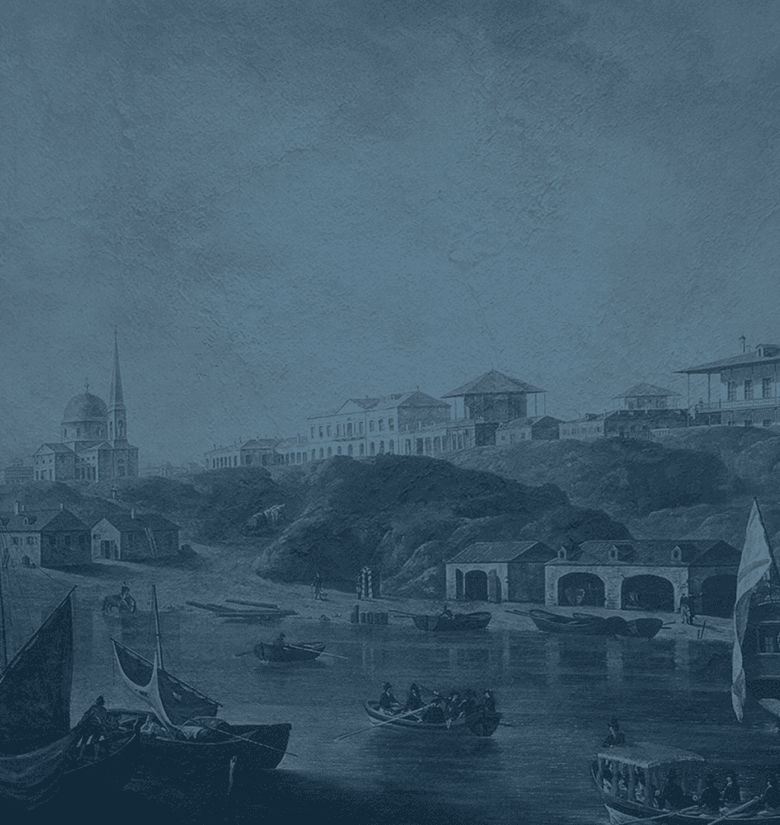
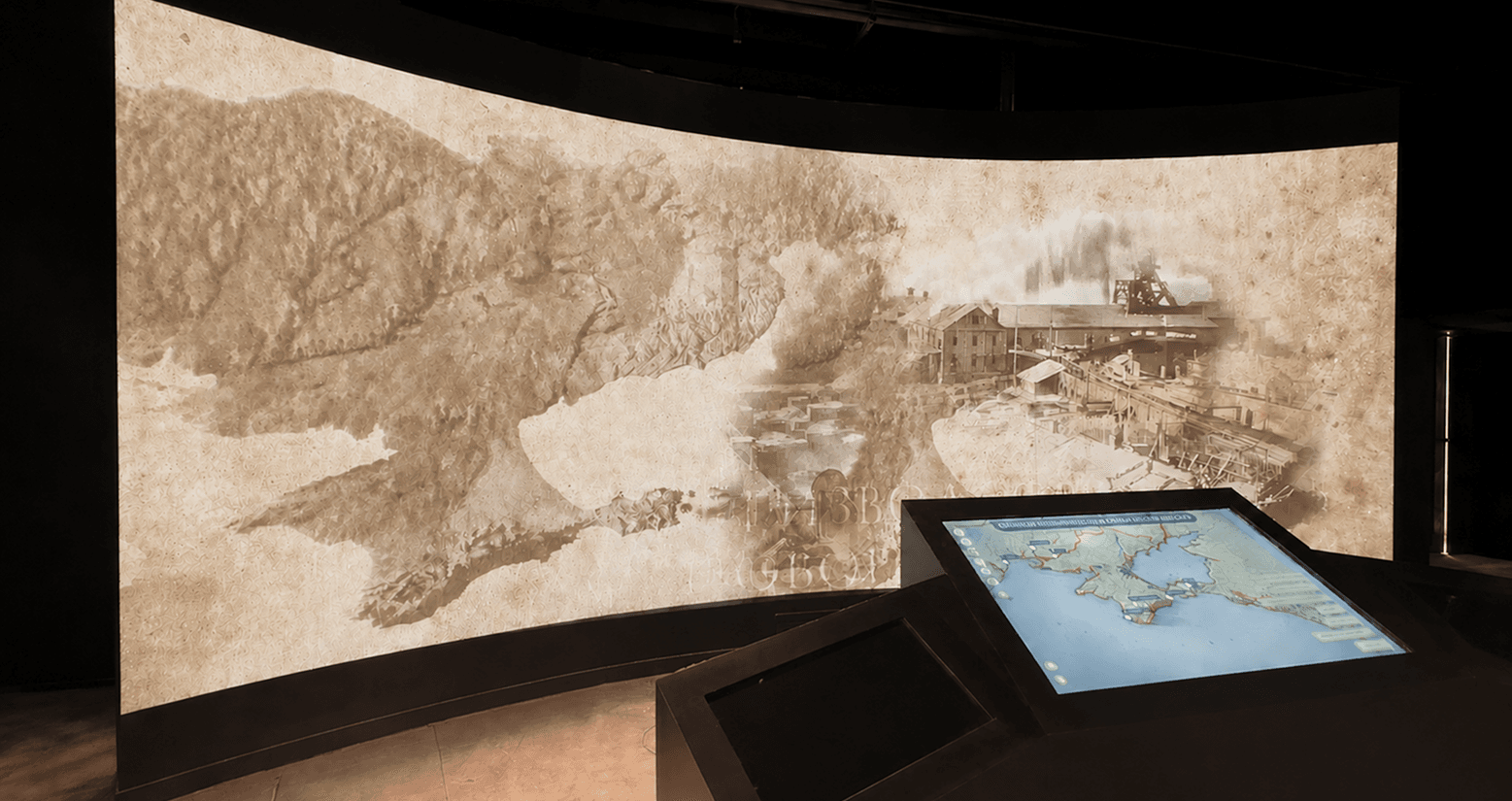
One of the project’s central challenges was working with large projection surfaces and an extensive volume of historical content. Information-rich museum materials had to be transformed into an intuitive interactive format, featuring selectable hotspots, carefully designed information-reveal scenarios, and reliable multi-user functionality. Special attention was given to composition: when different hotspots were activated, the content had to remain legible, avoid overlapping adjacent information blocks, and integrate naturally into the exhibition’s visual environment.
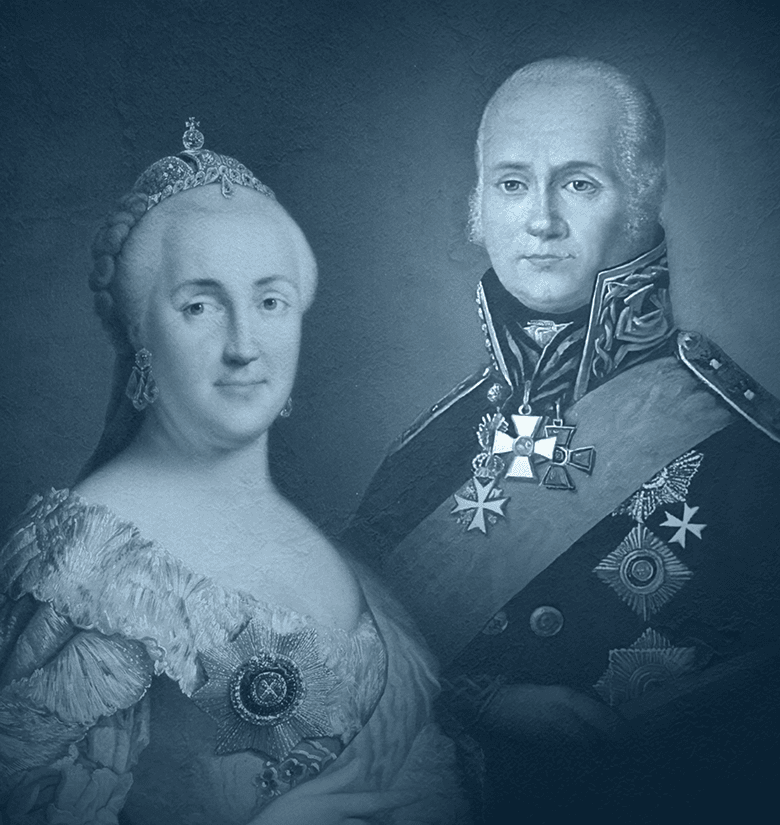
In the installations dedicated to the Romanov dynasty, naval admirals, and political figures, touchscreens were connected to large-scale wall projections. Visitors selected a section or historical figure on a personal screen, while large portraits, videos, key facts, and visual highlights appeared on the wall.
This format made it possible to present an extensive body of historical information through a visually impressive multimedia experience while enhancing the monumental scale of the museum space.
“MAP OF NAVAL BATTLES” INTERACTIVE TABLE
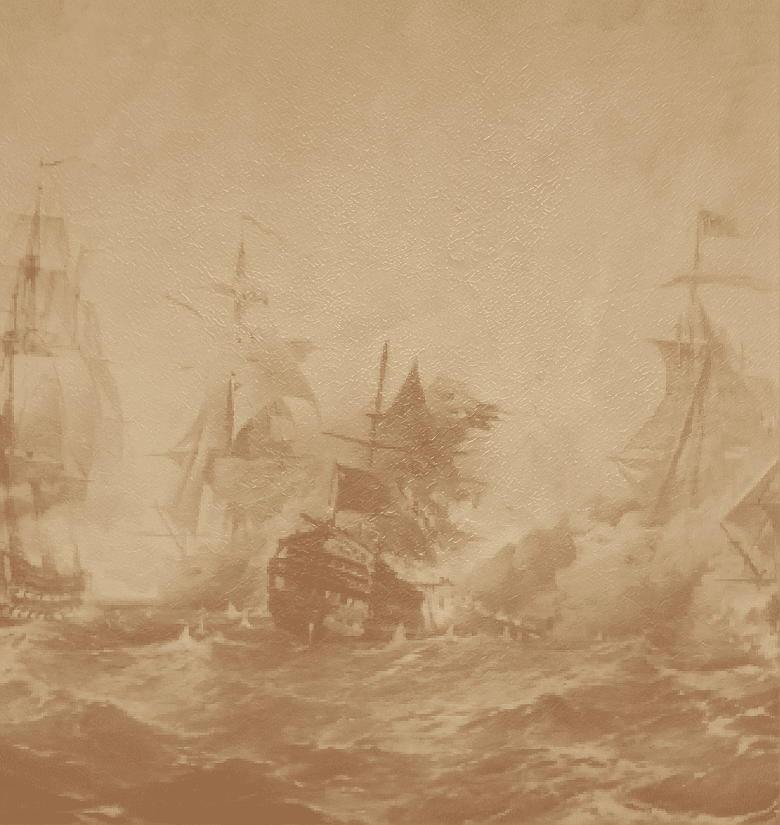
A large circular interactive table with a full-surface projection presented the key naval battles of the Russo-Turkish Wars using 3D visualisations. Through a search menu, visitors could select a particular naval battle and explore its progression in detail.
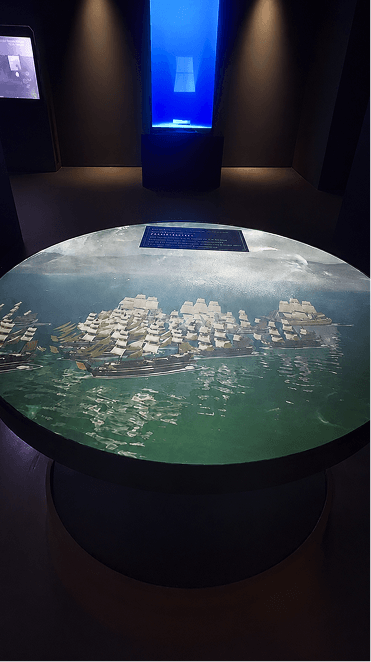
The table created the impression of a strategic command map, with events unfolding directly in front of the visitor. 3D visualisations and motion sensors transformed historical information into a dynamic recreation of a naval battle.
THE RESULT
The project became one of our largest multimedia productions for a museum exhibition, incorporating extensive 3D graphics, animation, interactive scenarios, illustrations, projections, and sophisticated cartographic visualisations.
A large multidisciplinary team of designers, 3D artists, cartographers, illustrators, animators, and developers worked on the installations, bringing an enormous volume of historical material together into a cohesive, visually impressive, and visitor-friendly experience.
The result was a multilayered digital environment in which museum content is not simply displayed, but brought to life through movement, large-scale visual scenes, and interactive engagement.